NOL24 Political Desk launches a 90-day public examination of experience, performance, vision and the future of representation
ASABA, DELTA STATE — August 29, 2026
The political temperature is beginning to rise in Aniocha Oshimili Federal Constituency.
With the 2027 general elections approaching, the conversation is moving beyond party slogans and political gatherings into a more fundamental question: What kind of representation does Aniocha Oshimili want for the next political cycle?
It is against this backdrop that NOL24 Media Cathedral has launched “The Aniocha Oshimili Dialogue”, a 90-day constituency-wide platform designed to examine political antecedents, legislative records, development claims, competing ideas and the expectations of constituents.
The platform will place two emerging narratives under the microscope: experience and established political capital on one hand, and new energy and a fresh approach to representation on the other.
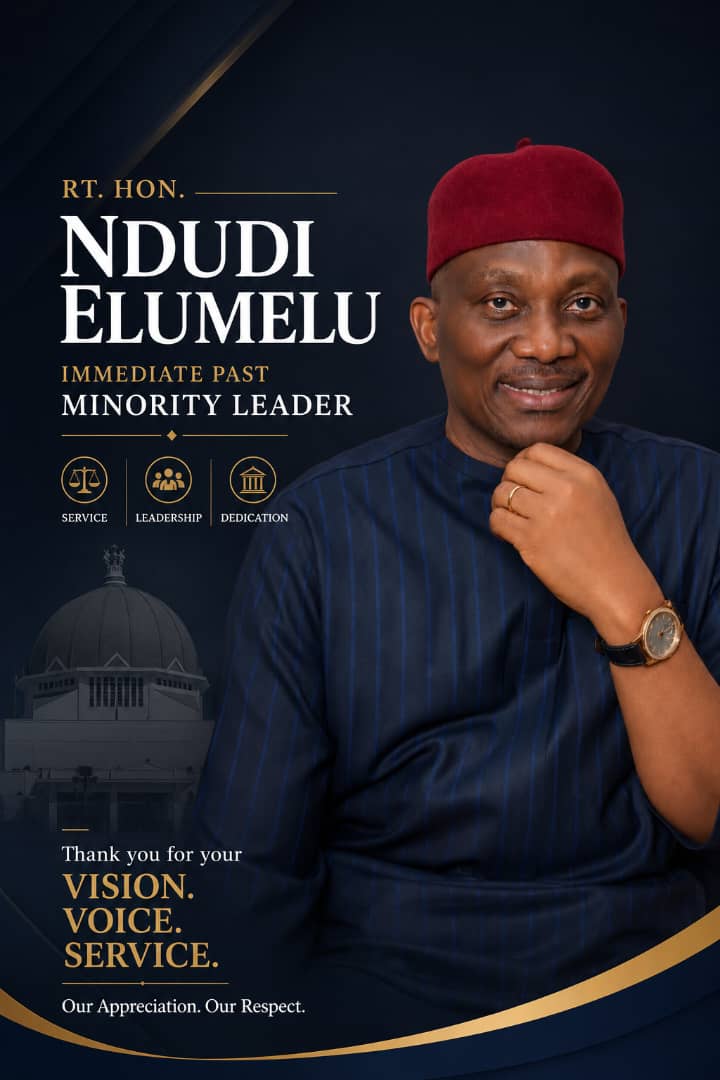
At the centre of that conversation are Hon. Ndudi Elumelu, former Minority Leader of the House of Representatives and former representative of Aniocha Oshimili, and Ms. Isioma Ndah, a public affairs professional and emerging political voice associated with calls for youth inclusion, accountability and a different direction in representation.
But NOL24 says neither personality will receive a free pass.
The question is not simply who has supporters.
The question is: Who has the evidence?
ELUMELU: EXPERIENCE IS AN ASSET — BUT WHAT IS THE SCORECARD?
Hon. Ndudi Elumelu comes into the conversation carrying a substantial political résumé.
His years in the House of Representatives, including his emergence as Minority Leader, gave him national political visibility and access to one of Nigeria's most important legislative institutions.
His supporters argue that his long years of representation provided Aniocha Oshimili with federal visibility, political influence and constituency interventions.
But longevity inevitably creates expectations.
After years in public office, constituents are entitled to ask difficult questions.
What precisely changed because of his representation?
Which projects can be independently verified?
What legislative interventions produced measurable benefits?
How many constituents gained employment or economic opportunities?
What was achieved in education, healthcare, roads, electricity, skills development and human capital?
Which promises were fulfilled?
And perhaps the most uncomfortable question:
If the record is strong, can it withstand independent scrutiny?
These are not necessarily accusations. They are the legitimate questions that come with democratic accountability.
NOL24's proposed fact-checking component is therefore significant.
Rather than relying exclusively on campaign narratives, the dialogue intends to examine claims against available evidence.
For Elumelu, experience could be one of his greatest political assets.
But experience can also become a liability if voters conclude that the achievements of the past do not adequately answer the challenges of the future.
NDAH: NEW ENERGY — BUT WHERE IS THE BLUEPRINT?
Ms. Isioma Ndah represents a different political proposition.
She is not entering the conversation primarily on the strength of a long legislative record.
Her emerging appeal is built around new energy, advocacy, accountability, youth inclusion and a potentially different relationship between representative and constituents.
That message could resonate with voters who believe that political representation requires a generational shift or a new model of engagement.
But newness, by itself, is not a policy.
And political enthusiasm is not a development blueprint.
The questions confronting Ndah are therefore equally demanding.
What exactly would she do differently?
What are the first five priorities?
How would those priorities be financed?
What is the employment strategy?
What is the plan for young people?
How would constituency projects be selected and monitored?
What mechanism would ensure transparency?
How would she use the legislative platform to attract investment and development?
And critically:
What does “new energy” mean in measurable terms?
These questions will determine whether the argument for generational or political renewal can move beyond rhetoric into a credible governing proposition.
THE REAL CONTEST: PERSONALITIES OR IDEAS?
Perhaps the most important aspect of the emerging contest is that Aniocha Oshimili voters may eventually have to choose between competing philosophies of representation.
One philosophy places considerable value on experience, political relationships, institutional knowledge and an established record.
Another places emphasis on renewal, accountability, accessibility, youth participation and new ideas.
Neither argument should automatically be regarded as superior.
Experience can produce results.
But experience without measurable impact becomes difficult to defend.
New energy can produce innovation.
But innovation without a workable blueprint can become political marketing.
That is why the NOL24 dialogue is proposing to place both sides under the same microscope.
THE ‘100 REASONS VS 100 QUESTIONS’ TEST
NOL24 Media Cathedral is framing its intervention around an unusual but potentially powerful concept:
100 Reasons vs 100 Questions.
The “100 Reasons” represent the achievements, experience, strengths and arguments that political actors can present to voters.
The “100 Questions” represent the scrutiny those claims must face.
It is a simple democratic equation:
If there are achievements, show the evidence.
If there are promises, explain the pathway.
If there is a criticism, substantiate it.
If there is a new vision, demonstrate how it will work.
That approach could make the Aniocha Oshimili conversation considerably more substantive than the usual political exchange of accusations and counter-accusations.
FROM OGWASHI-UKU TO ASABA: TAKING THE DEBATE TO THE PEOPLE
NOL24 says the dialogue will not be confined to television studios.
Three community town halls are planned in Ogwashi-Uku, Issele-Uku and Asaba, providing opportunities for citizens and stakeholders to engage directly with the issues.
The platform will also feature eight fact-check reports and a weekly television and digital series examining constituency priorities.
Among the issues expected to receive attention are:
Infrastructure and roads
Employment and economic opportunities
Healthcare
Education
Youth development
Legislative representation
Constituency projects
Accountability and transparency
This is where the initiative could become particularly important.
Because elections are ultimately not about media personalities.
They are about citizens.
THE QUESTIONS ANIOCHA OSHIMILI MUST ASK
Beyond Elumelu and Ndah, the dialogue raises broader questions about political representation.
Should a representative be judged primarily by the number of projects attracted?
Should legislative performance carry greater weight?
How should constituency projects be measured?
Does political influence translate into development?
How much should youth inclusion matter?
What mechanisms should constituents use to hold representatives accountable?
And perhaps the most important question of all:
What does Aniocha Oshimili actually need from its representative between 2027 and 2031?
That question could ultimately prove more important than the personalities competing for the position.
NOL24: ‘THIS IS NOT A CAMPAIGN PLATFORM’
Peter Legacy, Founder of NOL24 Media Cathedral, says the organisation intends to maintain a clear editorial boundary.
“Aniocha Oshimili deserves to choose 2027 based on facts,” Legacy said.
He described the initiative as a platform for the people rather than a vehicle for any candidate.
That distinction will be critical.
For the dialogue to command public confidence, NOL24 will have to apply the same standard of scrutiny to every participant — established political figures and emerging voices alike.
No candidate should be protected from difficult questions.
No candidate should be subjected to unfair treatment.
And no political claim should be accepted merely because it is repeated loudly or frequently.
THE BATTLE FOR THE NARRATIVE HAS BEGUN
The 2027 election may still be months away, but the battle for political narrative has already begun.
For Elumelu, the challenge is to demonstrate that his experience represents more than political longevity — that it translates into a record capable of satisfying a constituency whose expectations are changing.
For Ndah, the challenge is to demonstrate that “new energy” represents more than a compelling slogan — that it can be translated into a practical, measurable programme for representation.
And for the voters of Aniocha Oshimili, the challenge is perhaps even greater:
To listen beyond the noise.
To interrogate the claims.
To demand evidence.
And ultimately, to decide.
The Aniocha Oshimili Dialogue therefore arrives with a deceptively simple proposition:
Don't tell the people who to vote for. Give them enough facts to decide for themselves.
As the 2027 political contest takes shape, Aniocha Oshimili may be preparing for more than an election.
It may be preparing for a referendum on experience, performance, accountability and the meaning of new political energy.
NOL24 POLITICAL DESK
100 Reasons.
100 Questions.
One Constituency.
One Decision.
This is neutral.
It does not endorse.
It informs.
ANIOCHA OSHIMILI 2027: ELUMELU’S 16-YEAR LEGACY VS NDAH’S NEW ENERGY — WHO HAS THE STRONGER CASE?
Related Reports
ELUMELU'S FOURTH-TERM QUEST: Can Experience and Influence Withstand the Rising NDC Wave in Aniocha/Oshimili?
By Peter Legacy and Uche Austin ASABA, DELTA STATE — The political landscape of Delta North witnessed another definin...
2027: AAC's Isaac Eshor Unveils Industrial Blueprint, Targets Maritime Revolution for
2027: AAC's Isaac Eshor Unveils Industrial Blueprint, Targets Maritime Revolution for Delta By Peter Okenyebunor The...
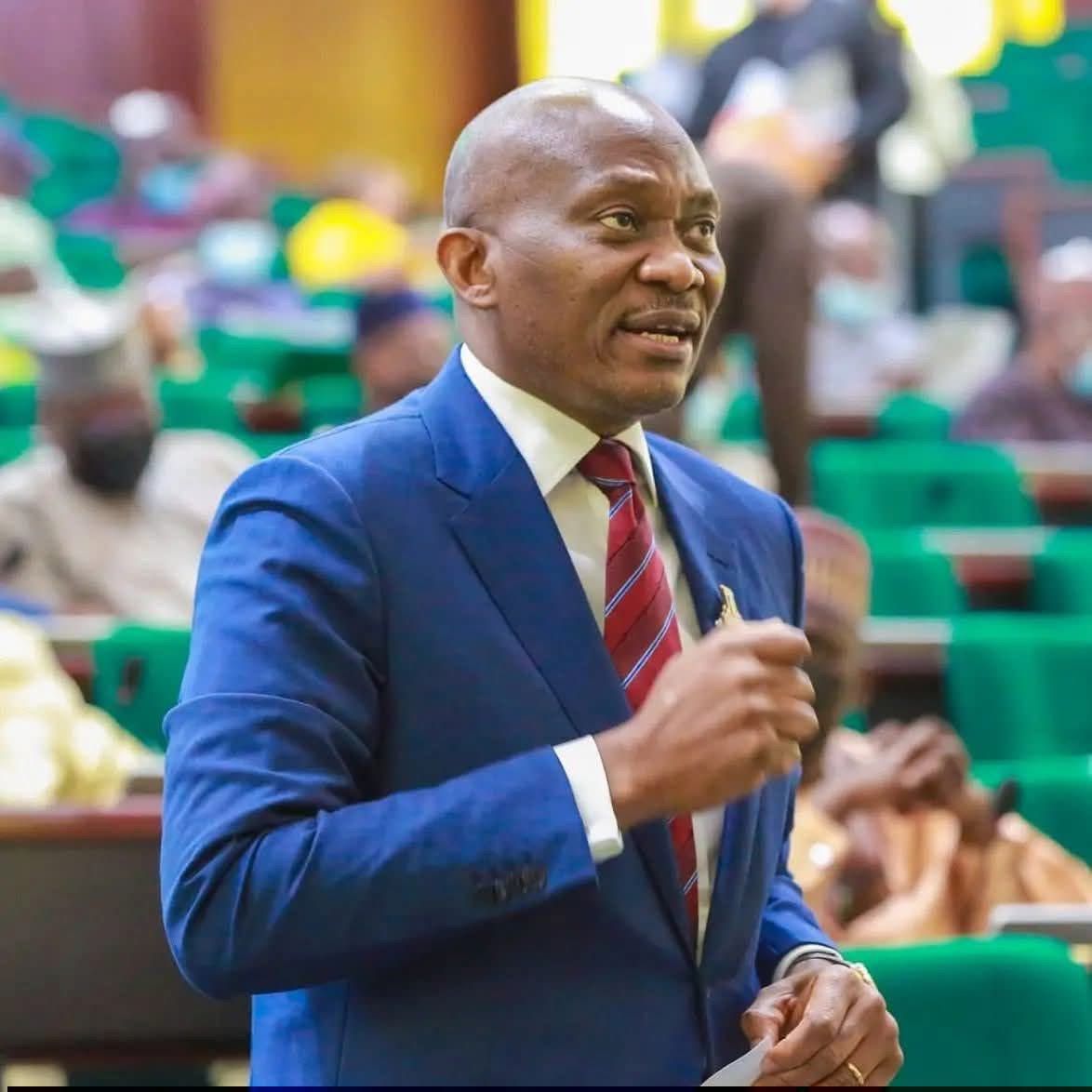
WHY IS ELUMELU THE UNDISPUTED OPTION FOR ANIOCHA OSHIMILI
Hon. Ndudi Elumelu: A Proven Legislative Statesman Returning to Represent Aniocha/Oshimili As the 2027 elections appr...
GLORIA OKOLUGBO AND HER CHILDISH POLITICAL RANTS AGAINST SENATOR NWAOBOSHI
By: Ike Philip Abiagom Hon. Gloria OKOLUGBO, the self styled Director of Communications for the Office of Senator Ned Munir Nwoko, has recently been raving and ranting in the media space, with all manner of uncou